Sunday, 28 November 2010

The Seat


Sthira sukham asanam
Prayatna saithilyananta samapattibhyam
Tato dvandvanabhighatah

Asana is steady and joyful
Asana is effort turning into balance turning into stillness turning into revelation
Then, one is no longer disturbed by opposites

Yoga Sutras of Patanjali, sutra 46, 47 and 48


All of us enter the world of yoga with all kinds of different motivation, ranging from a wish for better physical fitness, to relaxation, to peace, fascination with Indian traditions and sometimes a mixture of all of these. Also, the gates we enter through are often times more or less different, as some of us start up in different yoga traditions and then move on to others, or sometimes we stay where we started.

The three sutras cited above are the only three in the "Yoga Sutras" by master Patanjali that specifically mention asana, or yoga positions. This is very interesing as asana is, for most of us, the first thing we get to know as we start practicing yoga.

A funny thing I think I see in almost everyone who sticks with yoga practice for several years or forever is that no matter why or where they started up, even if it was just with more flexible and stronger body as the only goal, a new spark gets ignited. Some people start reading the scriptures, some get curious about Sanskrit and/ or chanting. People start going to India and spend time and money on yoga workshops.

Asana practice, also in the Ashtanga yoga tradition according to Sri K. Pattabhi Jois, consists of many aspects: In addition to the yoga positions, asana, we practice bandha (the energy locks), dristi (the gaze focus), ujjayi breathing, in addition to a specific sequence of postures. In other words, a steady yoga practice gives us quite a bit to do.

It is very usual to get very caught up in the physical asana practice at first. A good friend of mine often uses the term "to master" when he speaks about different asanas. He gets unhappy and frustrated when an asana he considers desirable seems to "resist" him. Of course, this is a tendency I recognize from my own years of practice. I still go crazy. When I have to roll out (as opposed to elegantly leaving the position) of pincha mayurasana because I lose my balance, sometimes I get very frustrated. The physical practice gets the best of me.

At such times, it is useful to remember that going through this is one part of the practice. But what does it mean to master a yoga position?
In sutras 46 to 48, Patanjali tells us that a yoga position is to be steady and joyful. Through the effort that hopefully results in steadiness and joyfulness in any yoga position, we reach balance, through which we reach stilliness and then maybe revelation. This is a road toward dissolving opposites.

Patanjali doesn't say anything about a practicioner needing to tie him- or herself into a knot. We work on mastering our body, but mastering is not the same as coersion. It might even be the opposite of it. You master an asana as you would master anything else - by doing your best, wherever you are, step by step, respecting your body in the process. Wholesome discipline, folks. And maybe one day, you find yourself in a deliberate knot. Maybe not. But in a knot or not, hopefully we are nearer to balance and peace in any position, no matter how difficult we find it physically. Through this, we start deconstructing the world of opposites. We start liking the things we didn't like before. Like a great warrior, when we see challenges,we stand, steady in our breath and focus. And we stay and we breathe. And hopefully, we realize that there's nothing to get elated about, nothing to fear. Steady and joyful. This is one of the greatest things Ashtanga Yoga has given me (so far). One of the most tangible things.

As in an asana I might find difficult, I have started to be able to stay in challenging situations in my life off the mat and I stand and most often I am calm. Things are as they are, I need to stay, so I stay, and I don't lose my head. Mostly. This IS one of the gifts this yoga has given me. When I do get insane, it is comforting to know that I am capable of taking other choices. It actually helps remembering this.

This is how Ashtanga practice, seemingly turbulent, really is a meditation technique: You follow the sequence, your breath is strong and focused, your gaze is focused. Your thoughts might be racing but the asana sequence, the breath and the gaze bind them and you are steady and you keep doing what you need to do. This is how we work on turning the movement into meditation. After a while, there can be joy even in initially unpleasant positions and situations. You might have experienced things like this: You might be in an asana you find difficult, but you stay and you breathe and you find that you are actually quite happy. In this way, it doesn't matter how deep in a position you are on the physical level; you master it by mastering your mind while in the position. Yoga is staying present no matter what, leg behind the head or not. It does not matter. What matters is that you are doing your best and that you are present. For us westerners, our bodies are often times the most accessable tool when we start up this kind of work. Our bodies are then the gates into something far larger.

The physical progress will come with regular practice. Seen from this perspective, firmer and stronger, more flexible bodies are a bonus, but never our final goal. If physical progress is the only goal, we are still at the gates. Pre-yoga, someone called it (I don't remember who). Mental balance, joy, steadiness, stillness, peace and maybe glimpses of revelation of the fact that there is little to be concerned about is the real soul nutrition, while strength and flexibility are the toy in your cereal. The real yum-factor comes from the cereal itself. The toy is your additional gift. Strong, healthy body helps you detach from your body. You can meditate easier, you can start practising more advanced pranayama- and kriya (purification) techiques when your body is properly wired up for this. For this, you need to do your practice and find peace in your practice. This is so big! Finding peace in your practice. Gee....

The great thing is that through some effort, through realizing that an aware relationship with the tradition of our practice matters, we kind of start realizing, often cloaked in small glimpses of clarity, that very few things matter. A contradiction? I don't know. Ask me in 50 years. What I hope that I have started understanding is this: There is nothing to go crazy about.

And craziness is not to be underrated. One version is where you can get stuck up and arrogant in very athletic and advanced asana practice. This is not too constructive, considering the fact which tradition we apparently belong to. One meaning of the word "asana" is "seat", a connection to the ground. So to "take off" in ego-terms seems to be the opposite of what asana practice leads to. What it leads to is grounding and a healthier pespective on our egos.
The other side is where it is pretty easy to bliss out in a cross legged seated position, with a bolster under your ass. But go ahead and practice awareness and peace and joy in positions like lolasana (check out the picture above). Or any position that challenges you in some way. Practice not longing to get away. Practice not convincing yourself to get out after 5 breaths when your teacher asks you hold it for 15, especially if you are capable of these 15 breaths. Whether we do things like this, is what might determine if a position is a yoga position or a new party trick you can demonstrate to your friends.

I honestly try to have a pretty strong practice. I find it strong in its regularity, in my effort not to lose my mind and in knowing that the body-stuff is the tool for something larger. And this is when I started seeing it as "pretty strong": When I started getting flashes of awareness no matter whether I "liked" where I was or not. The practice is what it is, like it or not. Trancending the preferences, I think, has started to show me that I actually love what I thought that I didn't. The initial impulse is just that - an impulse; sometimes correct, sometimes less so. My job is to practice. Which I do. "Sthira sukham asanam" is serious stuff. Peace and joy in seeming adversity is radical. This is where we start tearing up the wrapping and going for the real thing.

And just to be 100% clear on this: I LOVE the toy in my cereal too. I love physical agility and strength. I love feeling healthy and flexible and strong. I don't think developing our bodies is mundane. I actually find it very important. And I especially love (what I think is) the fact that all this, as huge as it often is for me, is just a beginning of something far bigger. I trust Patanjali, you see. ;-)

Thursday, 25 November 2010

A Leaf, a Flower, Fruit or Water


Ashtanga Yoga is a demanding lover. All yoga is. Take wisdom from ancient scriptures and let it take you through your Christmas (or any other holiday) with humble ease and smoothness.

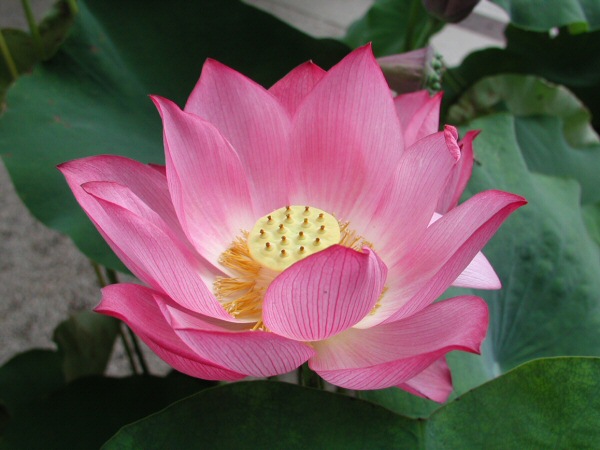
In chapter nine, 26th verse of "The Bhagavad Gita", Krishna states to the mythical warrior Arjuna that if something is given out of love and reverence, it will be accepted, even if it is just a leaf, a flower, fruit or water. The essence is not in what is given as such, but within the intent that infuses the gift. The intent creates the essence. It is the essence.

This might be especially relevant, on many levels, now that Christmas is drawing near.

As I stated in my previous post (and mentioned in several of the earlier ones), simplifying our practice in less then ideal conditions is sometimes a usefool tool that helps us maintain regularity of practice. This doesn't necessarily mean that you don't do an entire practice when you know you can, but that the energy of the practice is adjusted so that you, through that energy and your intent, show respect for wherever you are at, energetically, physically, timewise or all of these.
What Krisha teaches us in the abovementioned verse is that the inner force, the intention and the energy of what is given is what's important, and not necessarily the form of the gift. Show respect for this in your practice. You might even want to dedicate it to someone or something that drives you and inspires you. It might be your teacher, your partner, a cause or anything. When you hit an especially challinging piece of your practice, go back to what or who inspires you and "give" your practice to this person or cause. It doesn't have to be much. It can just be a straighter back in navasana or more active legs in kurmasana or whatever. You do it in the best way you can, safely and with love and you give it to them. Remember: "a leaf, a flower, fruit or water.". Easy. It doesn't matter. Do it with love and reverence and it will be enough.
If you, at some point, don't quite feel like dedicating your asana or your entire practice to anyone or anything in perticular, give it to yourself. Rather than just going through the motions,let yourself be inspired by Krishna and the lovely "Gita", and make the practice a gift to yourself. It doesn't have to be more complicated than pouring yourself a glass of clear icey water when you're thirsty would be. This means that gifting yourself with your yoga practice is not the same thing as you going all Cirque-Du-Soleil-esque-crazy on your mat. If it is not quite where you are (if it is, go ahead and swing it!), let what you do on your mat be this proverbial leaf or fruit or water, a simple and beautiful thing,you do for yourself from where you are. Remember that it is the intent, the substance that counts and not the form. The form grows out from the substance.

And then there's Christmas.....

And the spirit of giving?

"However humble the offering....". "The Bhagavad Gita" teaches us that it is the way we give and not what we give that is the real gift. The physical gift is the symbol. This does not mean that you should go to your nearest and dearest and go "I present you with these bird droppings with love..". :-) They probably won't get it. I am not sure I would either. If you can easily afford lavish gifts and you want to give them to your loved ones, by all means, knock yourself out. But if you are "temporarily short on cash", why not give them a flower, a simple book (a cheap edition of the "Gita" with a good translation and commentary?) or something along those lines and give it with love. Love will make it lavish. It is like the aforementioned straight back in navasana (when your lazy mind says: "droop!" and you know better and you straighten it instead) - you do what you can with the most love and kindness you can give. And that is the gift. It will most probably be accepted with the same love and gratitude.

Go back to the scriptures for simple and powerful stuff like this short passage from "The Bhagavad Gita". Many of you, if not all, who invest your time in reading blogs and websites like this one, tend to have vast amounts of dormant knowledge that gets triggered by the simple means of being reminded you have it and that you can put it to use. That is the beginning of yoga outside of the mat. Go! :-)

Sunday, 21 November 2010

My Travel Mat


I recently went to a work trip that took me from hotel room to hotel room, to friends' less-than-spacious living rooms. A possible threat to my daily practice? But this proved to be a non-issue, because, as it turns out, I have a super power. Or rather a super powered side-kick. My yoga travel mat.

Practicing while traveling is a challenge for most of us. If you are not a full-time yoga teacher, or a tough-as-nails yogic superhero (I'm getting there, just you wait), you will have experienced situations when doing your practice is difficult because your trip schedule leaves little time, or your hotel room is tiny or it is tiny AND the carpet is dirty and so on and so forth.

Whenever on the road, I have always taken yoga mats with me, for the last ten years or longer. Some have served me well, some not so well. For example, I love and adore my black Ashtanga-mat, but it is so heavy that dragging it around on planes and trains and to hotels around the world turned out to be a tedious chore. Plus the black mat is expensive, so if something happened to it, it would have been an unfortunate loss. PLUS I have had it for a million years, it has served me well, it still does, and I love it, so it's like endangering a pet (I know this sounded a bit overly attached :-D ).

Anyway, at a studio where I work, I recently got a travel mat. This is not a commercial site, so I am not telling which brand it was. There are probably several brands that offer them. It's light as a feather, it folds so easily that I carry it in my hand luggage, it has a superb grip and it doesn't slip on carpets (hotel rooms are a threat no more!).

So, I came back from a trip this morning. Hotels, tiny apartments, all kinds of crammed places..... For a week. And I practiced all over the place. Oh the beauty of it! I had a couple of hours between meetings (I couldn't practice in the mornings because we started early and the evenings were networking time, so it would have been socially unintelligent of me to just disappear), so I went to my room, rolled out my small, gorgeous mat and I practiced. And holy mother of Whoever, what a difference it made! Trust me on this. You have a choice to do your Ashtanga (or whatever your practice is) or not. And small adjustments like easy-to-carry-mats or improvised altars redefine your day because they make it super easy to make your practice a priority and squeeze it into your day. You realign your mind and body and (why not?) spirit in the middle of what could have been a mundane work thing and it is beyond kick-ass!

I swear that when I returned to my colleagues after my yoga sessions, I was refreshed beyond words. The practice took me to a completely different place and all that happened before it, that same day, felt like yesterday.

What IS the point of me writing this? It is this: Make it easy for yourself. If you don't practice when you travel, because your mat is heavy and big, get a travel mat. If you need an altar or whatever to meditate, put a couple of candles and a picture of your guru (or Jesus, or Shiva, Buddha, Lady Gaga, whoever) in your suitcase and make an altar. And do your practice.

My travel mat, a small, easy thing, helps me to re-create what could be ordinary, a bit uninspired, too-much-to-do-trips into a completely different thing. Find out what would make your practice easy when you are away to places that challenge the regularity of your practice and make those adjustments. Doing some yoga at a weird place does magical things to you. Sometimes there just isn't any time to visit local yoga shalas and -studios. Or there are none where you are. If you need to share a hotel room with somebody and you can practice without sticking your toes into their eyes, don't be shy and do it (practice, NOT stick your big toe in their eye). They might get inspired.

The more I do stuff like this, I honestly get Sri K. Pattabhi Jois' "Practice and all is coming" more and more. Transcending your "cannot" is practical magic.

Thursday, 12 August 2010

After It All Went To The Dogs (and not the downward ones)


I haven't been writing here for ages and ages. Many reasons for that, none particularly good. :-) I'm back, not writing marathone texts, but shorter stuff. That just might be the thing to keep me on track. Baby steps. Or baby asana?

About a year and a half ago, I injured my back. I'm not quite sure what happened. I had been to an intense and energizing workshop, where I did a lot of stuff and movement patterns I hadn't done often. A couple of days after, during morning Mysore practice, my lower back felt like it was set on fire. My range of movement got very much reduced. The body was protecting itself. The day after, the pain got worse. Everything hurt. Practicing. Walking. Turning around in bed. Sitting. Tying my shoelaces Everything. I didn't know a body could hurt so much outside of a hospital.
And of course, this influenced my practice. It was painful and it got irregular. I was in pain for quite a long time. But practicing wasn't murderously painful all the time. After a while, I found that I started blaming the injury for every "irregularity" in my practice. My asana practice wasn't consistent: "Oh I injured my back a while ago". I took shortcuts: "Ah, I injured my back." I didn't feel like practicing: "Oh, there's this stuff happening in my lower back......" The wheel of excuses turned into a big "chicken-and-eg"-thing. I didn't know what came first: my laziness or the injury.

A slight shadow of recognition that I had resorted to lame excuses in order not to do my best was gnawing on some far corner of my consciousness. Now, I have always taken quite a bit of pride in my yogic athletic abilities and I have had a secret feeling of inferiority about the stuff I didn't think I was "good enough" at. Some things I did as a pro. Some I didn't. Suddenly I thought I had an excuse I could chant forth every time I wanted to avoid or explain something and anything I wasn't content with in my practice (where did my oh so deep insights on santosha go???) :-D . I even convinced myself of all this bull dung. I lost a lot of strength. I lost some flexibility. My backbends weren't what they used to be. All because of lazy excuses. Oh lord, what to do, what to do? Roll out my mat perhaps?

I don't know what happened or when. I guess God saw me and thought "Oh man, that's lame. Is that what I put you on that planet for? Let me give you a hand.". I have no idea. I kind of remembered the "something is better than nothing"-idea.
I decided to practice again, at least for a bit, no matter what. If I just did the sun salutations A and B and the finishing sequence (backbends and inversions), I was to be content. So, I got back. And it is so delicious! So incredibly delicious. And it's not about doing a lot or just a bit. It's not about feeling fitter or not. It's about not being stupid about my life and what I am doing to myself. I am free to skip practice, as are we all. Then I asked myself: "Am I an ashtangi?". Yes I am. God, I am! So, onto my mat I go. Suddenly I found myself back in the yoga-freak-world. And I love it so! :-D

Wednesday, 18 November 2009

Why Vegetarian?


By Vedran
Vegetarianism is tightly bound with yoga and is by many considered to be a crucial part of the yoga practice. The practice in this context is seen as bigger than just what happens on the yoga mat. It is taken far beyond – to kitchens, pantries and cupboards. But what does vegetarianism have to do with yoga?

My first steps
Many years ago, I was receiving meditation lessons from one of my first yoga teachers, a tall bearded yogic monk, originally Australian, whose many years in India left an imprint both on his external appearance, orange temple robes and all, and on his vast knowledge of yoga traditions and philosophy. This kind, soft-spoken man gave me lessons and after receiving one, I went out and practiced and after a while, I would be given a new lesson that I would then integrate with what I had learned previously. This was before I ventured into Ashtanga. I had a soft hatha practice, drenched into lots and lots of meditation and philosophy. So, one day, my lesson with my teacher ended by him saying that I couldn’t proceed further before I stopped eating meat. I don’t remember what I answered to that but it was something along the lines of ”okay, I’ll give it a serious thought”. Inside, on the other hand, I felt offended. I felt offended by him suggesting one aspect of how I was conducting my life was wrong and I suppose that I also felt somewhat hurt. His opinions meant a lot to me and knowing that he obviously not only did not approve of something I was doing but that he actually seemed to have defined it as “not good enough” definitely stung. I kind of decided that I did not need those lessons anyway. And who was he to tell me what to eat or not?
Still, after a while I picked up a book on environmental- and health benefits of vegetarian diet. The book (I don’t remember the title or the author) was a bit on the preachy side but the first seeds of the new, non-carnivorous me were cast into the soil. I slowly started educating myself on how to build up a sound meat free diet. I am not the kind of person who goes cold turkey (no pun intended) easily. Or at least I used to not be. I had to learn how to cook proper food. Living on random boiled veggies wouldn´t work for me. And so I started. I picked up tons of cookbooks and experimented with soy products and other types of meet replacements. Sometimes it worked very well, while other things were more in the yuk – department. I don’t do yuk. I love food.
After a while, I got rather good for a rookie and my diet was almost completely vegetarian. And then I visited my parents. My parents live in Bosnia and Herzegovina, a beautiful country with lots of beautifully tasting food. Unfortunately, my parents at that time, as most other people in that region, considered meat the only “real” food. Everything else is garnish. You don’t survive on garnish. They couldn’t get my new “fix”. Me a vegetarian? I am already too thin! I resisted for a while and then I broke completely. I woke up while I was in a restaurant with my close relatives and my brother said something like “Check out the vegetarian!”. The “vegetarian” was stuffing his face with minced meat of some sort, greedily devouring piles of the minced body of some animal. I felt so ashamed.
Short time after that, I came back to Norway, where someone served crabsticks at some meeting. They were disgusting. I think I had some. Then I stopped. I stopped, I went vegetarian and I never turned back. This was many many years ago.

The nature of the natural
I have noticed that people often tend to resort to the argument of “the natural” when we need to explain any kind of nonsense we do. Depending on what we need to explain, we depict the natural as desirable or something we need to distance ourselves from. So, while comparing someone to an animal most often connotes that the person isn’t too pleasant to deal with, we turn the argument around when we argue that something we take for granted needs to be the way it is because it is the “nature’s way”. One of those things is that when we kill animals, cut them up and eat their dead bodies, we do it because it is natural. We are at the top of the food chain. We kill because we can and feed on the lower species. Why then do we view it as repulsive when we who live in the political west hear that in some other cultures, they eat cats and dogs? How is that different from eating a cow or a sheep or an elk? Well, it’s not. It is as (un)natural to cut up a rat or a cat or a puppy and then consume their cooked corpse, as it is to do the same to a lamb or a cow, or a horse or what have you. Of course, we could argue that while it is natural to feed on animals, culture dictates which animal species are acceptable as food in a specific region or a given culture. And as far as being an animal goes, it seems like we are not supposed to act like animals when interacting with other humans while in our interaction with the animal species that our culture views as stove-friendly, we do choose to act like a dominant animal species, at the top of the food chain.
The difference is that a lion, a wolf, a bear etc. cannot decide that he/ she will feed on fruits, vegetables and nuts from this day on. We humans have both possibility and capacity to do so. There is nothing natural about us consuming meat of other animals. It is the question of culture, habit and convenience. In addition, the animals we eat are mostly not carnivores. We don’t eat wolves and tigers. We eat mostly vegetarian species, like cows and sheep. We eat them because we chose to. We chose to because there is a whole industry built around slavery, exploitation and ill-treatment of animals. We breed, genetically modify and slaughter other living beings in order to turn them into food. We cut up forests in order to grow crops to feed billions of animals bound for butcher shops and such. How is this an act of nature? If anything, it as an act against it.
To my great disappointment, I heard a renowned American self-improvement teacher say “Vegetarianism – done that – didn’t work”. He went on to say that he used to follow a “strict vegan diet” and that he got fat because all he ate was rice, pasta, potatoes and bread. Since when did stuffing your face with pasta, rice and dough become a “strict vegan diet”?? And then he said something like: “If you’re a vegetarian listening to this, here’s something you probably haven’t thought about: If we stop eating animals, they still aren’t going to stop eating each other! Those animals are going to die anyway! As are we!”. Oh gee, now, this is a well put and revolutionary argument! So, what does this mean? That we might as well start eating each other? A wolf is physically a carnivor and humans aren’t. And a carnivorous animal can’t just change his or her mind, so that the aforementioned wolf goes and has himself a lentil soup. Humans can.
And again – what about the environment? Apparently, it takes about 8-9 cows per year to feed a regular meat eater. Not because they devour these cows in their entirety, but because when you take all the parts of the killed animal in the account that a meat eater consumes during a year, about 8-9 animals need to be slaughtered to meet that need. It takes acres and acres of land and tons and tons of vegetables, fruit, wheat and what not, to feed one cow. So, when you eat this animal, you also eat all that it has eaten. The costs are grotesque! In comparison, vegetarians come practically for free. Check out Sharon Gannon’s “Yoga & Vegetarianism” for more facts.
And here’s the thing: Anything can make you unwell if you approach it in an uneducated way. Research links (check out “The China Study “and “Skinny Bastard” for the REAL hardcore facts) use of meat and dairy to the explosion of cancer and lifestyle diseases on the planet. And this doesn’t fail: The countries with the highest rates of meat and dairy consumption are also the ones most plagued by cancer, obesity, diseases of the respiratory and coronary systems etc. And sure, there are unhealthy, overweight and underweight vegetarians and vegans, but if you do it properly and intelligently, there’s nothing like vegan/ vegetarian lifestyle to make you healthy, energetic and gorgeous. I have been a super herbivore for most of my adult life and I am not overweight – I’m actually in a great shape – I am healthy and full of energy. So, no need here to eat a carcass or two. NOBODY needs this. Nobody.
A fellow yoga student once said: “All in the world is One, so in that way, you might as well eat a chicken or a cow as you can eat a vegetable!”. Really? Go eat your mother or your granny (or both! Knock yourself out properly!) then, baby. Or at least, eat your cat. No? Why not? Oh.
You either value life or you do not. If you don’t, you should start. If you truly value life, why should it be alright or in any way natural to torture and kill an animal and then consume its dead body? No matter what your stance when it comes to differences between humans and (other) animals, these too are creatures that want to live, that try to escape when they know they are in danger, they too get hungry and thirsty and care for their children. They do not want to end up in your wonton soup. If the are there, the chances are quite slim that they volunteered.

Yoga
In asana practice, we do all kinds of postures with names inspired by the animal kingdom. There’s dog, cat, cow, snake, locust, crocodile, fish, peacock…. When the ancient yogis and rishis designed these postures, they did so by observing the animals in nature. The postures are there as a chance for all of us yoga students to embody the energy of these animals, to connect and hopefully to raise our level of empathy. On an esoteric level, asana practice too deals with your karmic patterns, stuff that is stuck in your body, your bones, muscle tissue, in your mind and in your energy circuits. Seen from this perspective, when you put the suffering, humiliation, torture and death of another creature into your body – because animal bodies are loaded with energy, as are human bodies, and things happen when you enslave, imprison and kill any being - how can this be good for you? It is not good for you, it is sure not good for whomever you have eaten, it is not good for the planet we live on. If you do yoga, if you read books on yoga, have good and knowledgeable teachers, you go to workshops and belong to a yoga community and you still eat meat, there is no other excuse but ignorance or laziness. You’re allergic to soy? Big deal. You can get your protein in gazillion different ways. If you eat a good selection of vegetables, fruits, nuts and legumes every day, you will get what you need. You don’t need to shovel in beans every single day.
The phenomenal Jivamukti yoga teacher, Sharon Gannon, writes that the fact that we feed on other animals is a reflection of our slave driver mentality. These animals are born and raised in captivity and the sole purpose of their existence is to be killed and eaten. What if we viewed these animals as nations? If it seems far fetched, well, it shouldn’t be. These are complex beings that – let’s face it – don’t want to die. They die because they get killed. And we do the killing. If not directly, then by buying products that come from the industries that are based on slavery, mutilation and slaughter of other species. We are taught otherwise in our schools and in our society, but the core of the matter is that killing another species for their meat and skin is torture and murder. You want that? No one in their right mind wants that.
And what about the “organic meat” or game, the animals that lead good lives or even live in freedom? Some say it is okay to eat such animals, because they lived well and we also need to “control the population” of this or that animal species. What if we stopped shooting elk? Wouldn’t nature fall out of balance? First of all, where nature is out of balance, it is mostly that way because we pushed it out of balance. Human species has proved ingenious enough to come up with the most creative ideas, when we really want to, so we would surely find a way to keep nature restore balance in nature without needing to kill, if we wanted to. Secondly most hunters do not hunt game because they want to keep or restore balance, but they view it as sport. And what about the “good life in freedom”-thing? Does that mean that it would be more okay to shoot, cook and devour a free, happy human being than a poor one that has lived in captivity most of his or her life? No. It boils down to us arrogantly assuming that animals are things and that we own them. Nowdays, they come packed in nice plastic bags and boxes, all cleaned up, so that we as consumers need not reflect on how that meet got there. The cow or the goat donated it to the supermarket? Perhaps not.
And finally, if you are an ashtangi, or if you practice any type of yoga where you happen to chant a bit, have you ever chanted “Lokha samastha sukhino bhavantu”? In this chant, you wish happiness, prosperity and freedom to all beings out there. Yes, animals too. If you are an ashtangi, you have chanted this in the end of your practice, thereby devoting it to all the beings on Earth (and beyond, who knows?). And then, you go and eat them and dress in their furs? It is not a good feeling being a hypocrite. When we act like this, no matter what, we always know it, on some level. And it will always reflect in your thoughts, in your mind, in your heart, in your body. You can’t be really true to yourself and support killing of others. I know a great, fantastic and globally renowned yoga teacher that eats meat because of allergies to a lot of things vegetarians eat. This teacher says “I am a hunter” and honours the animals getting killed and eaten, their earthly and spiritual roots, their souls. With all due respect (because this is a person I admire greatly), what if somebody slaughtered this teacher’s family or lover and then honoured their souls and thanked them for their meat and skins? Unacceptable. As unacceptable as it is to kill any other creature.
I also heard a global pop star say “I am not vegetarian. I have never been politically correct.” What a pillar of enlightenment this person is. Not. It is not politically correct to be a nazi either. But still most of us wouldn’t want to be one.
To cut the preach fest here, if you are a meat eater and you are contemplating going vegetarian, do it. If you think it is hard, start thinking it is easy. It is easier for you to read up on how to maintain a nutritious and tasty plant based diet than it is for the chicken on your plate to be beheaded and get its legs cut off.

Now What?
Just stop. Stock up on some good vegan and vegetarian books (check out Sarah Kramer’s “La Dolce Vegan” – it’s easy to follow and the food is perfect) and educate yourself. Start ordering vegetarian food in restaurants. If they don’t have anything vegetarian on their menu, tell the waiter to tell the chef to make something. Demand. It works. It’s always a good test of a restaurant, by the way. If a chef can’t improvise forth a vegetarian dish, he is NOT a real chef. Why would you want to pay for something cooked by a sucky chef?
And remember: What you eat, drink and breathe creates you. Physically, mentally and energetically, it creates you. What you consume turns into your cells. The same way you wouldn’t eat just any crap out of your toilet and let your body turn it into your future cells, why would you want a decomposing and festering body of an animal (yes, fish too), to become a part of you. Because it really does become a part of you. And if you think “it’s not decomposing and festering!”, well do you know how long it stays in your intestines and simmers at body temperature? For days! And days and days! Meat! On 37 degrees Celsius! Whereas non- animal food shoots out of you quite quickly (forgive me any mental images this might have inflicted upon you). You feed your body and it uses what you give it as building blocks for a future you. Don’t turn yourself into a dumpster. Try it for a month. Try it for two. If you stock up on some good books, so that you don’t end up living on bread and rice only, you’re probably completely safe. If you do it this way, chances are, you’ll feel too fabulous to ever turn back..
Check your bookstores for good veggie cookbooks or go online and get them, if that is easier. Don’t get the books that demand you fly to faraway places in order to get the ingredients you need. Unless it is easy for you to go get a rare spice on a faraway mountain. In that case, be my guest. There are a lot of great books with simple and phenomenal recepies that you can make in a dash. When I travel, I always carry with me “Vegan A-Go_Go”, a book for vegetarians on the road that enables me to prepare super easy nutritious vegan food no matter where you I am.
So, don’t get stupid. Go veg! ☺

Monday, 6 July 2009

Bhujapidasana - Dare To Be Different


By Vedran

Here’s a thing about the primary series in Ashtanga: after a while, you will slide through about half of the series with relative ease. You know the sequence and even if you are tired, even your muscles are tight or whatever, it will be fine. Breathe in – jump through, breathe out – land and bind, breathe in open the chest, breathe out – fold. You come to navasana , a position that many dread because it’s hard on the core, but as far as the technique goes, it is not terribly difficult. So you do it.
And then it comes: Bhujapidasana, the ”shoulder press” position. At most yoga schools, in the west anyway, it is not unusual to stop beginner classes here and go to the finishing sequences and relaxation after navasana. This is good, as it gives everyone time to work on the basics. On the downside of it, a lot of people will get stuck doing only half primary series for ages, long past the point where they could have challenged themselves further. Or some people will go on past navasana but maybe skip the bhuja pidhasana, kurmasana and even garbha pindasana/ kukkutasana sequences because they seem to be somewhat overwhelming in terms of what they seem to demand of your strength and flexibility. Yet, all of us being aspireing yogis, we know that the yummiest flavour of things comes from playing the edge and ultimately seeing it move.

Beginners: Land outside of the yellow brick road

In one of my favourite films, ”The Wizard Of Oz”, Dorothy and her companions are told to follow the yellow brick road while on their way to meet the great wizard. While their departures off the road caused them more trouble (but more sizzle to the film), the yellow brick road on your yogic path might sometimes turn out to lead into a rut and monotony. After all, the Ashtanga sequences were created to progressively lead you to new levels of body and mind awareness. So, here are a few tips that could hopefully help you to jump off the route of the known:
If you are a beginner in a relative sense – that is, if you are comfortable with the primary series up to navasana, the first thing to munch on when going into bhujapidasana is the landing.
When in your downward facing dog, finishing the vinyasa out of navasana, you jump your feet to the outsides of your hands. In the beginning, you can work first one and then the other shoulder under each respective knee. If this definitely feels like enough you might want to stay here for 5 to 10 breaths and move on to backbends and inversions, i.e. the finishing sequences.
But if the shoulders under the knees part was okay, then you press your knees slightly against your shoulders for stability (as mentioned earlier, bhujapidasana means ”shoulder press”) and try to sit down on your upper arms and lift your feet off the floor. You will probably need to transfer some weight forward, or else the weight of your thighs and bottom will tend to pull you down on your ass. Then you try to cross your ankles and have a taste of that. If this is enough, eather stregth-, balance- or flexibility-wise, you can stop here (for example if you are completely unable to cross your ankles or if you can´t keep the posture afloat) .
If you can go on, you breathe in and on the outbreath, you drop your chin to the floor/ mat, lift your hips up toward the ceiling and work your crossed feet backwards between the wrists, all the while trying to keep them (the feet) off the floor. Most people will struggle with the chin on the floor part, as this is not the easiest posture to keep your back long in. So, if you can only have your forhead or the top of your head on the floor, instead of the chin, this is completely okay. At this point, you might want to slide your hips a bit lower down from your shoulders, as this gives your shoulders a bit more room to open as you go down. This might also make it easier for you to place your chin on the mat, instead of the forhead or crown. And there you have it. You take five breaths here and then ride your vinyasa out of the position. And how do you do that? Still pressing your inner thighs against your upper arms, you breathe in and lift your head up, while your hips come a bit lower toward the mat. You straighten your legs into tittibhasana (it doesn’t have to be the strongest tittibhasana you can do – too much energy in this can drain you before you finish the vinyasa) and as you breathe out, you whip your legs and body back into chaturanga (maybe passing through a very short bakasana, but no fuss if you can’t).

Intermediate/ advanced: Leap into it!

If you have practiced the entrance into bhujapidasana described above, or any other modified version and if you are fairly comfortable with it, you might be ready to take it a bit further. And the way to take it further is to jump into the posture straight from adho mukha svanasana (the downdog). Chances are that in your first few (or many) attempts, your feet will have to touch the floor. No worries. If bhuja pidhasana is an asana you are okay with in general, this is the way for you to enter it. Sooner or later, you will be able to jump in without your feet touching the floor.
The trick is not losing your mind after you jump. Personally, I think it helps to think of, almost visualise, what I am about to do. And the second part of the trick is not to worry if your feet keep touching the floor. Actually, when you jump straight into the posture, the thighs will have a tendency to land in a more correct position in relation to your upper arms and shoulders, compared to what often happens when you work yourself in from standing. Jumping straight in, most of us are unable to jump the thighs high up on the shoulders, so you will not have to think about having to slide them down when you start leaning forward to touch the chin on the floor. Oh rejoice!
The jump-in method makes the position more fun to do. For me, it also made it easier to lean forward and down. One part of it is probably the more correct distance between thighs and shoulders but there must be something else too, as my feet (they’re big!) slide through between my wrists easier. What used to happen was that I had to walk them backwards and then lift them off the floor. Since I started practicing jumping in, they seem to slide without me having to do much (or any) walking.

So, next time you practice….

Next time you practice, given that you are generally comfortable with this position, try flying in instead of the easier version where you enter after landing your feet on the mat. At first, it might seem ridiculous, but come on, this is yoga we are talking about, so what did NOT seem ridiculous when attempted for the first time? Swing your adho mukha svanasana (down-dog)a bit forward right before you jump. This might make it easier. Make flying into the posture the way you practice this vinyasa, even if your feet touch the mat every time. Eventually they won’t. You can also ask your teacher to give you some pointers.
For those of you who practice this position and try entering it in a new way, this could be one of those little things that give your practice a bit more zest.
If you used to stop at navasana (especially if this is what you have done since the dawn of civilization), this might be the time, to give bhujapidasana a try. Try the modified version first and see where it takes you. It might just be well beyond the yellow brick road. And YOU just might turn out to be the wizard!

Thank you


On May 18 2009, Sri K Pattabhi Jois died in his home in Mysore, India. The way I found out was unusual and even now as I am writing this, almost two months later, it seems unreal. I found out after I had held a class and as people were leaving, someone commented on how Guruji had been ill. And then she asked: "Has he died?" I answered: "No, of course not, he's probably fine!". And the girl behind the reception desk said "No, he died today." Unreal.

I haven't studied under him and I had always thought I would someday. I have been fortunate to train with many of his students. All my teachers have been his students, so through them he influenced me. They say he had a unique touch and could train even severely injured people. Alexander Medin, a great teacher, lovely human being and certified teacher once said that what Guruji appreciated was being seen as a regular human being once in a while, amidst all admiration of him as a guru.

No matter which yoga tradition you belong to or follow, K Pattabhi Jois has probably touched your practice in some way. For us ashtangis, he has been and will always be the teacher of us all. Now that his grandson Sharath has taken over as the leader of the Mysore Shala, the teachings of Ashtanga yoga are in the best hands they could possibly be in.


We thank you, Guruji!